“Customers become frustrated when payments slowed during busy mid-year sales periods.”
– Store Manager, Apparel Retailer
What Happens During Peak Hours?
Payment terminals are overloaded during periods of high retail demand, such as mid-year sales, holiday promotions like Chinese New or Hari Raya, or weekend rushes.
Long wait periods, unsuccessful purchase, and noticeably lengthening checkout lines can all appear out of nowhere from what should be a simple tap or card insert (Soraadmin, 2025).
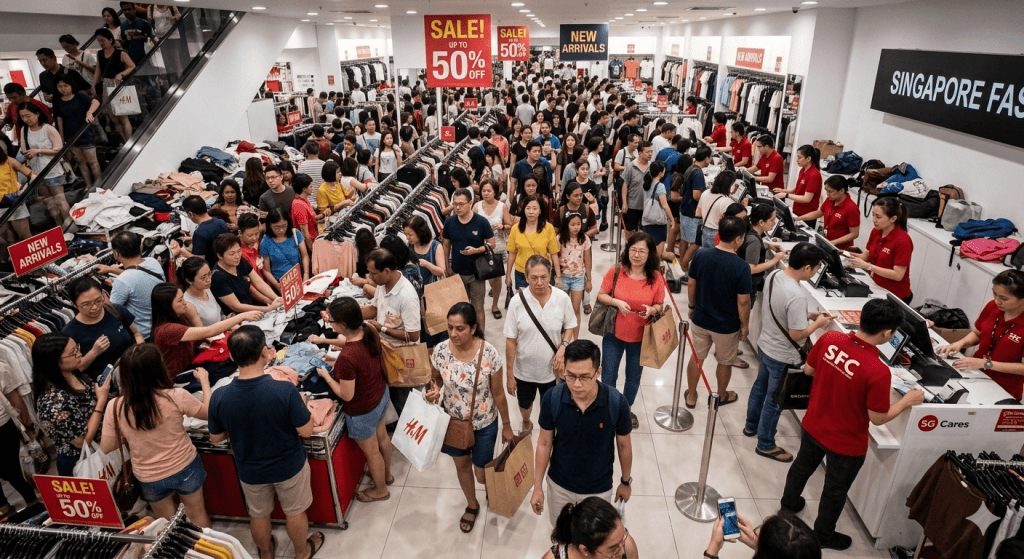
For retailers, these delays do more than frustrate customers. They also directly impact sales, staff efficiency, and brand perception.
Understanding the root causes behind payment terminal slowdowns is the first step to fixing them.
Many of these peak-hour disruptions stem from one underlying issue, unreliable and inflexible connectivity within high-density retail environments in Singapore with a single-network SIM dependency.
To address these challenges, Singapore retailers increasingly require a more resilient and high-availability connectivity approach.
This is where LGA’s Multi-network SIM solution for payment terminals plays a critical role in eliminating retail payment terminal delays. By automatically capturing the strongest available mobile network, payment terminals can avoid congestion related slowdowns and common payment terminal network issues during peak hours.
By removing the need for onsite SIM swaps, manual troubleshooting, retailers can now ensure minimal interruption and maintain more consistent transaction performance across outlets by auto capturing the strongest available network.
Businesses can also benefit from centralized SIM management, improved visibility across payment terminals and access to multiple mobile network operators, helping ensure payment terminals remain responsive even during peak transaction surges.
The 5 Common Causes of Payment Terminal Delays
1. Payment Gateway Latency During High Transaction Volumes
During peak retail periods, payment gateways may experience significantly higher transaction loads, especially during major sales campaigns and weekend shopping surges across Singapore.
At the same time, retail networks supporting POS terminals, staff devices, inventory systems, and customer Wi-Fi can become heavily congested. (Cisco, 2016).
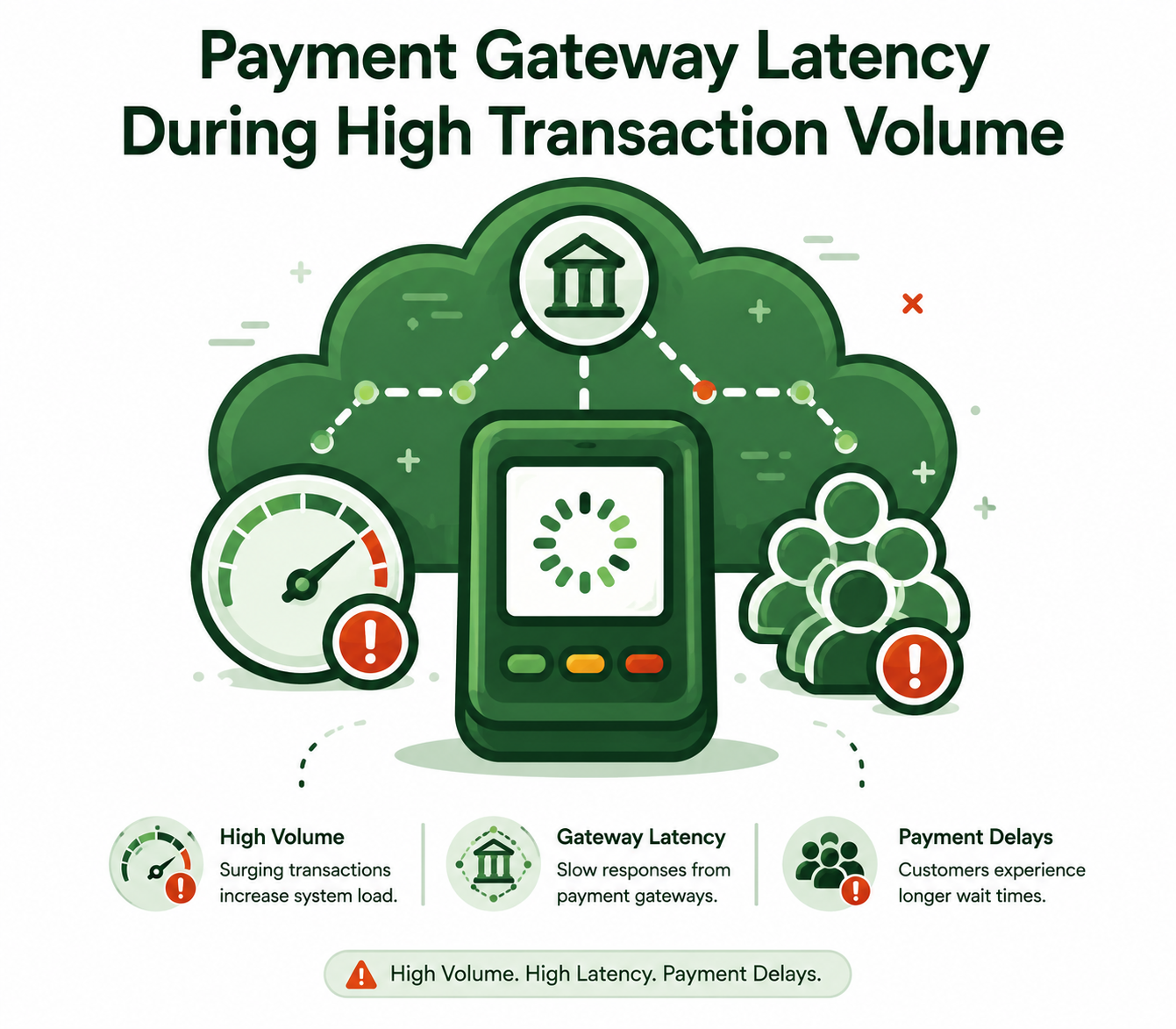
As transaction volumes increase, even minor network slowdowns can quickly escalate into longer checkout queues, slower payment approvals, and disrupted customer experiences during critical peak-hour operations.
In high-traffic retail environments across Singapore, unstable Wi-Fi connections and single-network dependency can significantly worsen payment terminal delays during busy sales periods.
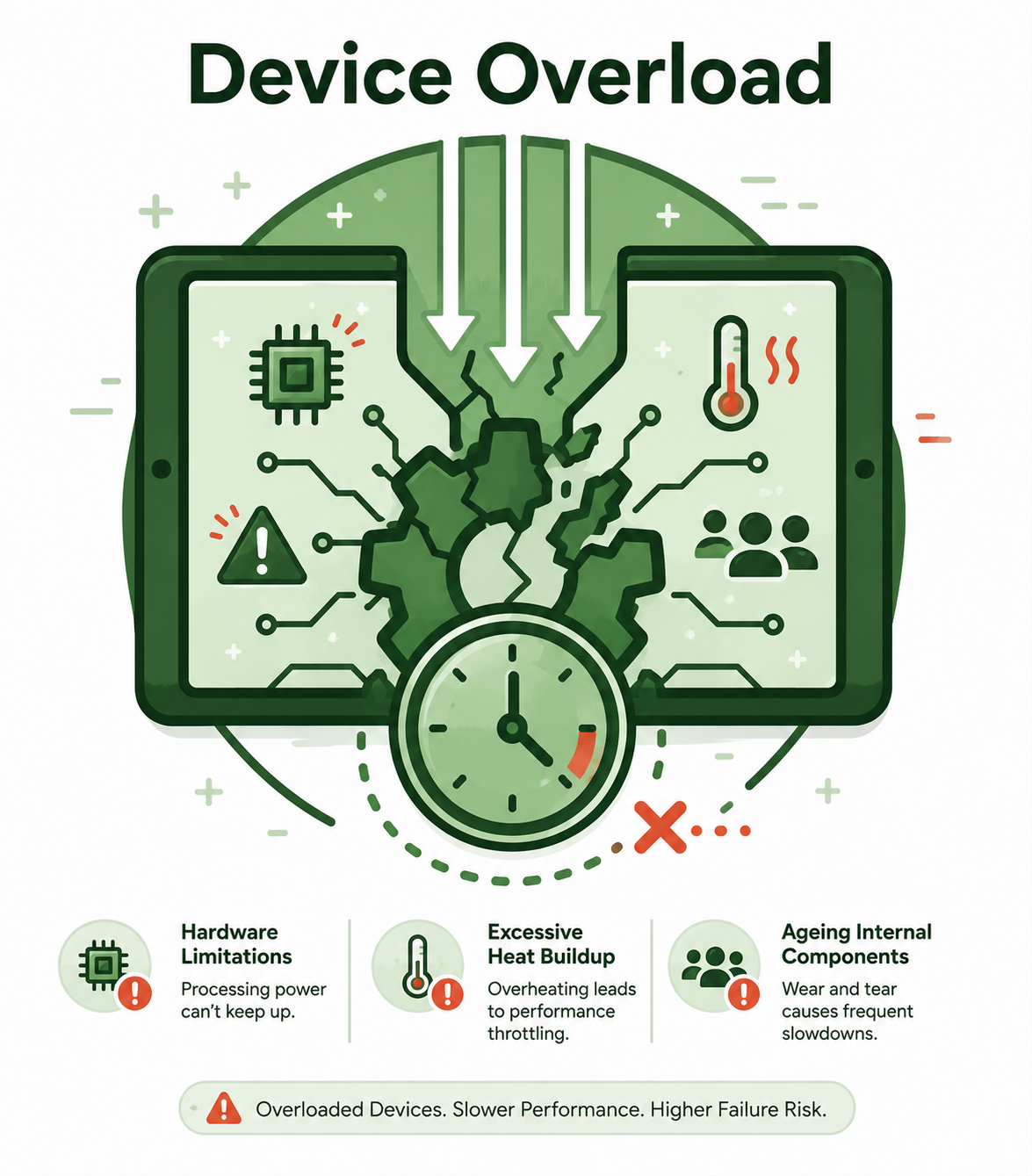
2. Device Overload – Underpowered or Outdated Terminal Hardware
The limitations of the terminal hardware itself may potentially be the cause of payment delays.
Multiple background apps, excessive heat buildup, or aging internal components can all cause POS devices, specifically tablet-based systems to lag (Block, Inc., n.d.)
When transaction volumes surge during peak hours, these antiquated or underpowered terminals find it difficult to manage the additional load. Small system faults that quickly compound cause the checkout counter to exhibit noticeable lags, frozen screens, or even unexpected crashes.
3. Single-Network SIM Dependency
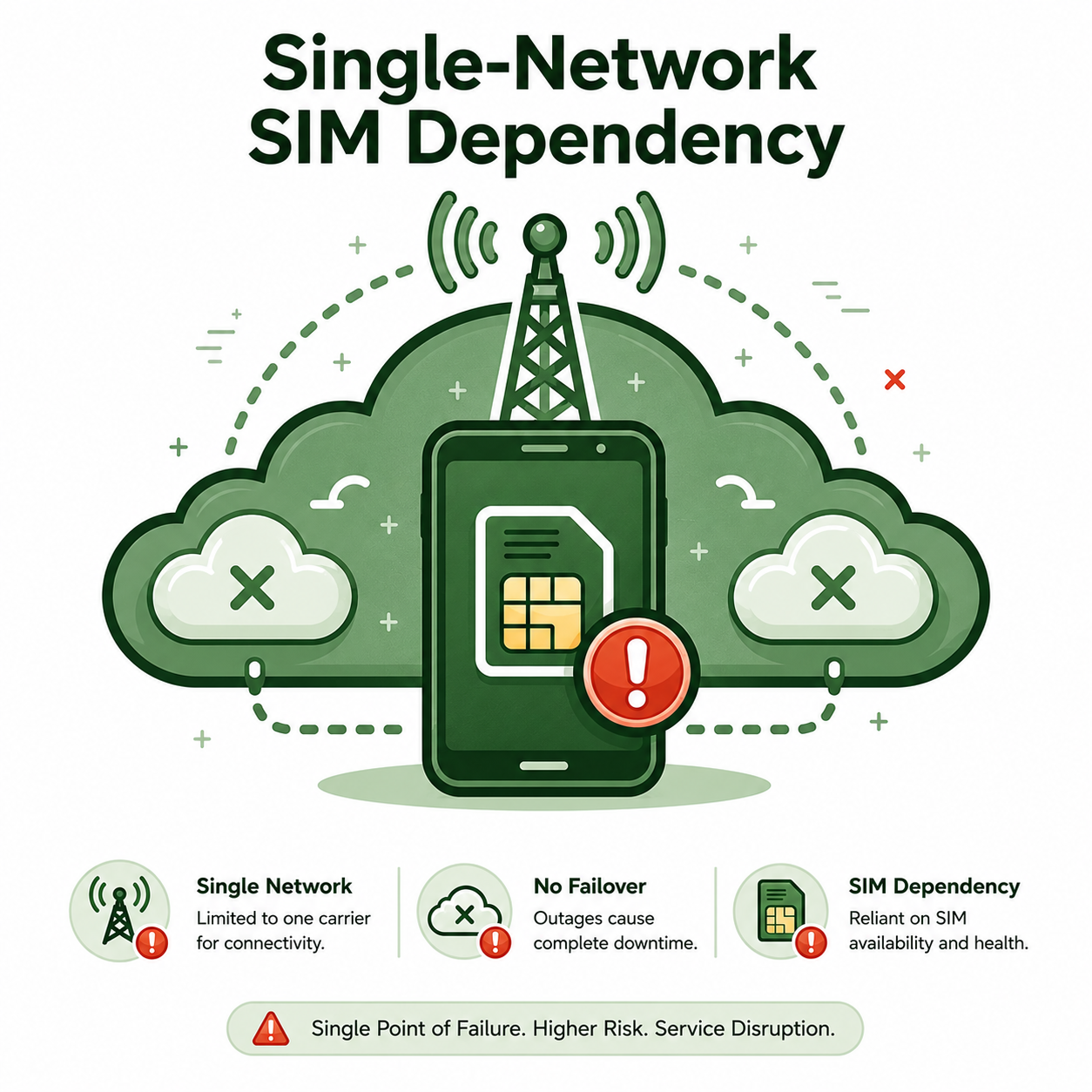
Many payment terminals rely on a single mobile network provider.
During peak retail periods, localized congestion, coverage or temporary network degradation can slow transaction processing or cause payment failures.
Without multi-network, payment terminals cannot dynamically capture stronger available networks, resulting in transaction delays and operational disruptions during high-traffic periods.
4. Poor Configuration – Slow Payment Gateway and Intermediary Routing
Payment processing can also be considerably slowed down by a poorly configured system, even with dependable hardware and connectivity.
Intermittent connections may result from poor Wi-Fi coverage, and out-of-date software and may find it difficult to comply with contemporary security regulations and payment methods.
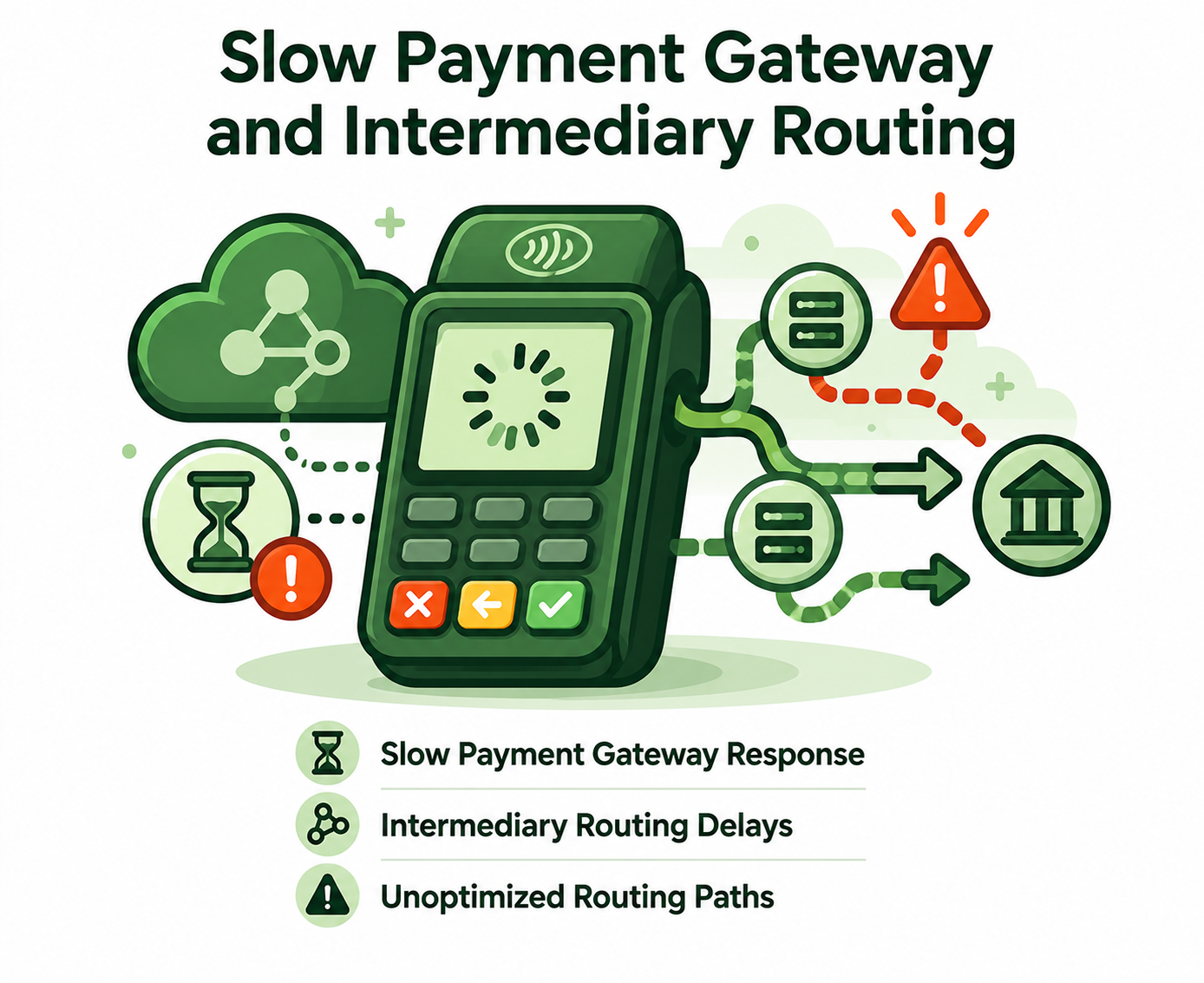
Furthermore, the POS system’s excessive add-ons or background services may use up important system resources.
These issues can lead to slower payment gateway responses, failed transactions and unnecessary checkout disruptions during peak trading hours.
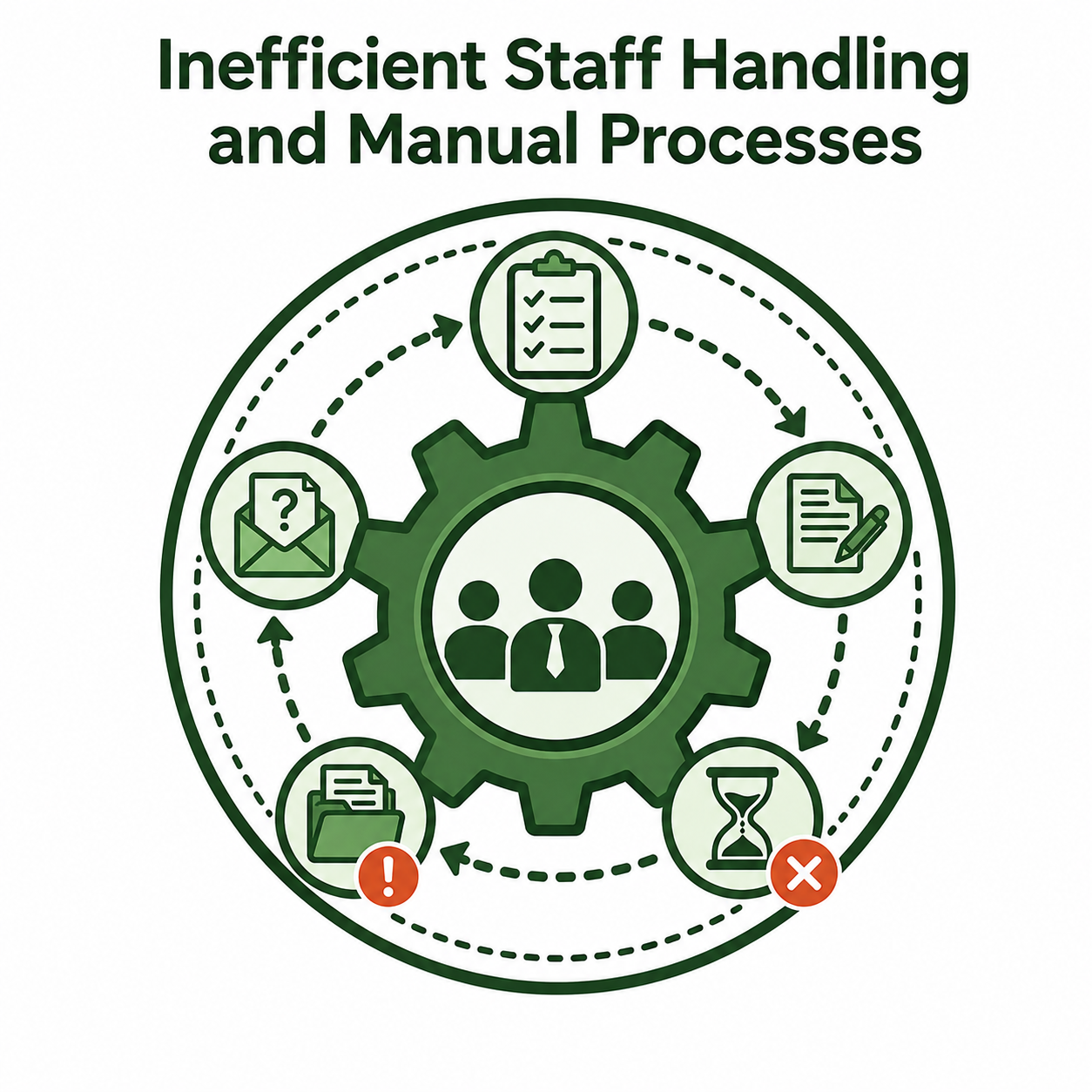
5. Inefficient Staff Handling and Manual Processes
Inefficient staff handling and manual processes can also significantly slow checkout operations during peak hours.
When staff members are unfamiliar with payment workflows, repeatedly retry rejected transactions, or manually switch between systems and devices, even small inefficiencies can quickly accumulate.
As these issues may appear independent, many of them are closely linked, and often intensified, by how payment terminals connect to networks during peak hours.
As customer expectations continue shifting toward fast and seamless checkout experiences, unreliable connectivity exposes a major weakness in traditional payment terminal setups.
Incremental fixes are often insufficient.
Retailers require a more resilient, flexible, and high-availability connectivity approach capable of maintaining stable payment performance during peak trading hours.
How LGA Solves It?
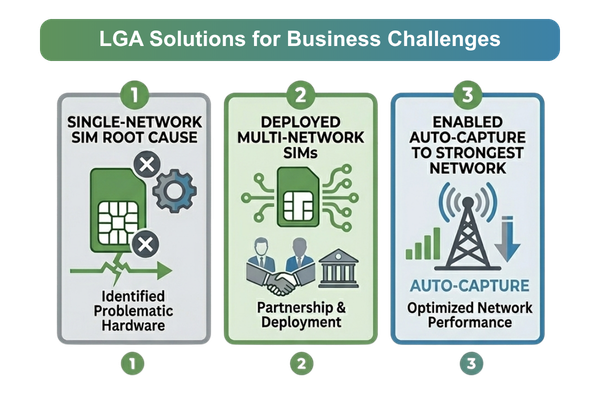
Introducing LGA’s Multi-network SIM solution, designed specifically for high-availability and transaction-critical retail environments.
For many retailers in Singapore, LGA identified single-network SIM dependency as one of the primary causes of payment terminal disruptions during peak trading periods after assessing live retail payment environments.
As such, we work closely with payment service providers to implement multi-network SIM connectivity across retail payment environments, enabling payment terminals to connect to multiple mobile networks instead of relying on a single provider.
With plug-and-play multi-network coverage, payment terminals can now instantly access available mobile networks without manual APN configuration.
Through centralized SIM management, retailers can also manage multiple payment terminals and devices from a single platform, improving visibility, operational control, and connectivity management across outlets.
By keeping devices connected automatically, retailers can reduce manual intervention, minimize operational disruptions, and deliver faster, more seamless checkout experiences during peak trading periods.
Conclusion
Businesses can no longer afford to ignore payment terminal delays during peak hours as retail environments become increasingly competitive and customer expectations for fast, seamless checkout experiences continue to rise.
Network congestion, hardware limitations, payment gateway latency, poor system configurations, and manual operational processes can all contribute to transaction delays during critical trading periods, resulting in operational disruptions and poorer customer experiences.
However, connectivity remains one of the most important foundations for reliable payment performance.
Businesses therefore need a resilient and flexible connectivity solution that can adapt to changing network conditions while maintaining stable transaction.
By automatically capturing to the strongest available mobile network, LGA Multi-network SIM solution helps retailers address network coverage challenges, reduce connectivity-related disruptions, and maintain reliable transaction performance across locations.
This enables businesses to support more consistent payment experiences, particularly in environments where network availability and coverage may vary.
Note: While our Multi-network Solution helps address SIM network coverage and availability challenges, actual performance may still vary depending on device, configuration, signal conditions and operating environment.
Want to learn how LGA’s Multi-network SIM solution can help eliminate payment terminal delays during peak hours?
Speak with our team to explore how we can support your retail operations.
References
Boulton, S. G., Goldsmith, S., Boulton, R., Nomitch, M., Bourzikas, G., Chatterjee, S., Irvine-Broque, B., & Meunier, T. (2025, September 26). How cloudflare uses the world’s greatest collection of performance data to make the world’s fastest global network even faster. The Cloudflare Blog. https://blog.cloudflare.com/how-cloudflare-uses-the-worlds-greatest-collection-of-performance-data/.
Cisco. (2016, February 15). QoS: Congestion Management Configuration Guide – Congestion Management Overview [CISCO cloud services router 1000V series]. https://www.cisco.com/c/en/us/td/docs/ios-xml/ios/qos_conmgt/configuration/xe-16/qos-conmgt-xe-16-book/qos-conmgt-oview.html.
Soraadmin. (2025, July 4). How to keep your POS system running smoothly. SERVD IT. https://servdit.com/blog/how-to-keep-your-pos-system-running-smoothly-during-peak-hours/.
Troubleshoot your network connection. Troubleshoot your network connection | Square Support Center – United States. (n.d.). https://squareup.com/help/us/en/article/8305-troubleshooting-your-connection