The Silent Cloud Breach: Why Visibility Matters More Than Ever

When the Breach Isn’t the Failure, the Blind Spot Is
Most cloud breaches do not begin with a dramatic, headline-grabbing attack.
They begin quietly, with a misconfigured storage bucket, an over-permissioned identity, or a credential used somewhere it’s never been used before. Individually, none of these look like a breach. That is exactly the problem.
As fintech organizations scale across multi-cloud environments and third-party integrations, the number of small, low-signal events grows faster than most security teams can track.

Without sufficient visibility and correlation across the environment, meaningful indicators can be missed until they develop into a larger security incident.
The challenge is no longer simply detecting individual threats. It is connecting weak signals early enough to recognise when they form a real risk.
Do you have the visibility to catch it while it’s still small?
In this article, we look at why FinTech organisations are attractive targets, why cloud breaches often begin with subtle signals, and how cloud anomaly detection can help security teams identify potential threats before they escalate.
At LGA, we work with FinTech organisations to strengthen their cloud security posture, helping IT and security teams move beyond reactive alert management towards continuous visibility across AWS and Azure environments.
Our Cloud Anomaly Detection Platform is designed around this challenge, turning cloud logs into actionable security insights and helping teams identify anomalous activity in real time.
Understanding why FinTech is such an attractive target is the first step towards closing the visibility gap.
Why FinTech Companies Are Attractive Targets?
FinTech environments bring together financial transactions, sensitive customer data and highly interconnected cloud infrastructure spanning banks, payment providers and third-party APIs.
This combination creates a valuable target for attackers. A single compromised account or exposed storage bucket can reveal transaction records, customer PII, and financial credentials all at once.

Attackers are increasingly targeting the identity layer.
Credential theft attacks targeting payment and transaction APIs rose 19% among financial institutions in 2025 and identity-related attacks now account for the majority of confirmed cloud compromises across industries (DataStackHub, 2025).
Regulatory pressure raises the stakes further. Between PCI DSS, SOC 2, GDPR and applicable financial regulations, a cloud breach can become more than a security incident, potentially creating compliance, operational and reputational consequences at the same time.
Without reliable, continuous visibility, FinTech organizations risk:
- Unauthorised access to transaction systems and customer financial data
- Delayed threat detection, increasing potential compliance and regulatory exposure
- Higher incident response costs as threats remain undetected for longer
- Loss of customer trust following a security incident

Most Cloud Breaches Do Not Start with a Major Attack
Cloud breaches do not always begin with a sophisticated exploit. They can start with something far less obvious, a misconfiguration, excessive permissions, compromised credentials or unusual activity from a legitimate identity.
The 2019 Capital One breach is a prominent example of how weaknesses in cloud security controls can have significant consequences.
An attacker exploited a misconfigured web application firewall to gain access to an over-permissioned AWS identity role, then used that access to read data from more than 700 Amazon S3 buckets, exposing personal information belonging to roughly 106 million customers and applicants (Cloudskope, 2019).
No zero-day exploit and no stolen credentials were needed. A single overlooked permission, combined with a lack of visibility into how that identity was being used, was enough. The breach cost Capital One an $80 million regulatory fine and a further $190 million in class-action settlements (Cloudskope, 2019).
The specific attack path will differ from one incident to another, but the underlying lesson is consistent: seemingly small security gaps can become significant when they are not identified and addressed early.
For FinTech organisations operating complex cloud environments, this makes visibility critical, not only for detecting obvious attacks, but for identifying the subtle changes in access, permissions and behaviour that may indicate something is wrong.
The Visibility Gap in Cloud Environments
Ask security leaders whether they have complete visibility across their cloud environments, and the answer may not always be straightforward.
Core production environments are typically well monitored. But visibility can become fragmented across temporary workloads, forgotten test environments, unused accounts and third-party integrations that accumulate as the organisation scales.

For FinTech organisations, these blind spots can introduce significant risk.
An unmonitored account, exposed API key or excessive permission may appear insignificant in isolation, but each creates another potential path into sensitive cloud resources.
The challenge is not simply having more security data. It is having consistent visibility across identities, workloads and activity as the cloud environment changes.
Why Traditional Monitoring May Not Be Enough
Traditional monitoring remains important for understanding infrastructure health, known events and established security conditions. But cloud environments introduce a different challenge: resources, identities and access patterns can change continuously.

Static rules and thresholds are effective at identifying known conditions. However, they may be less effective when potentially malicious activity does not match a predefined rule, particularly when an attacker is operating through a legitimate account or credential.
This creates a detection challenge. Logins may be legitimate. An API call may be permitted. Access to a cloud resource may be authorised. It is the context and combination of these activities that can indicate something is wrong.
For FinTech organizations, effective cloud security requires more than collecting logs and triggering predefined alerts. It requires the ability to identify deviations from normal behaviour and correlate activity across the cloud environment, helping security teams’ surface potential threats earlier.
What FinTech Environments Actually Need: LGA’s Cloud Anomaly Detection Platform
LGA’s Cloud Anomaly Detection Platform continuously monitors AWS and Microsoft Azure environments, turning cloud logs into real-time cloud threat detection through centralized visibility and consolidated security insights.
For FinTech organisations, what that translates to isn’t a longer list of dashboards, but what cloud anomaly detection for fintech looks like in practice – three concrete business outcomes.
1. Catching Insider Threats Before They Escalate
Suspicious user behaviour and abnormal cloud activity are identified early, before they escalate into larger security incidents.
Business Impact: Every incident caught at the “abnormal login” stage is one that never reaches the “regulatory disclosure” stage. This protects both the balance sheet and the customer relationships that FinTech runs on.

2. Detecting Potential Data Exfiltration
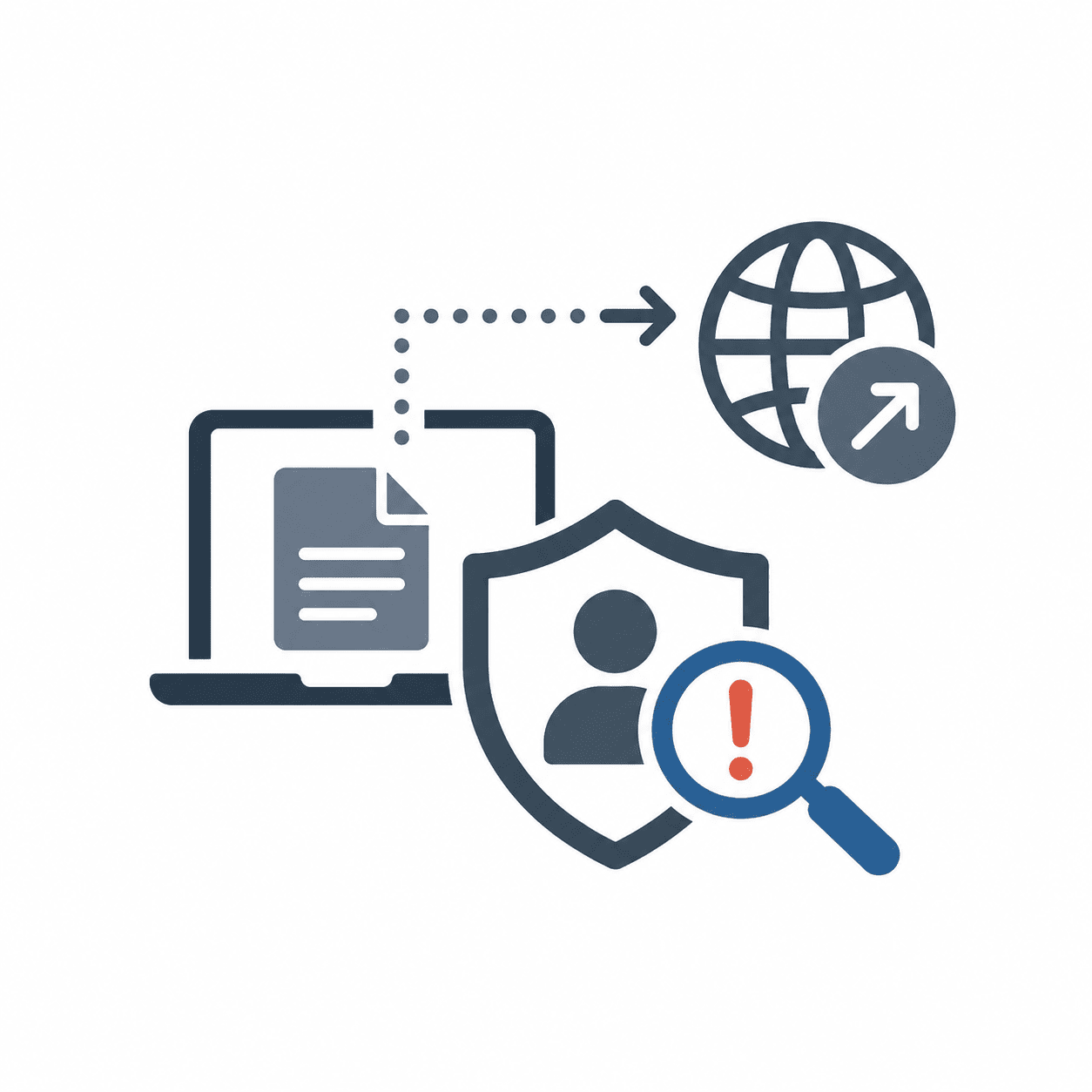
The platform monitors outbound traffic and suspicious communications, helping security teams identify unusual data movement and understand where information is being sent.
Business Impact: Earlier visibility into unusual egress activity can help teams investigate and respond before a potential incident escalates into a more significant data exposure.
3. Strengthening Cloud Security Posture
Cloud configurations across AWS and Azure are continuously monitored for potential security gaps, helping teams identify misconfigurations and areas of exposure that require attention.
Business Impact: Continuous posture visibility helps organisations stay better prepared for compliance reviews and security assessments, while providing clearer evidence of how cloud security risks are being monitored and managed.
Conclusion: Visibility Should Not Be an Afterthought
FinTech infrastructure is becoming increasingly complex, and staying ahead of cloud risk is not simply about having the biggest security budget.
It means treating cloud visibility as a core security capability, with continuous oversight across the identities, workloads and activity touching sensitive financial data.
As we have seen, significant security incidents can begin quietly: a misconfiguration, an excessive permission or unusual activity from a legitimate identity. The organisations that stay ahead are those equipped to identify and investigate these signals before they escalate.
LGA’s Cloud Anomaly Detection Platform helps FinTech organisations gain continuous visibility across their AWS and Azure environments, identify unusual activity earlier and respond to potential threats more effectively.
And that visibility cannot be a one-time project. As your cloud environment evolves, your ability to see and understand what is happening across it needs to evolve with it.
Looking to Close the Visibility Gap in Your Cloud Environment?
Discover how LGA’s Cloud Anomaly Detection Platform helps your team spot anomalous activity, monitor insider and outbound risks, and strengthen your cloud security posture without the extra noise.
References
CloudSkope, C. (2019, July 1). Capital one breach 2019: 106M Records, one SSRF flaw. Cloudskope. https://www.cloudskope.com/breaches/capital-one-breach-2019
David. (2025, October 25). Cloud threat statistics for 2025–2026. Data Stack Hub. https://www.datastackhub.com/insights/cloud-threat-statistics/
David. (2025b, October 25). Cloud vulnerability statistics for 2025–2026 – exposure, exploits & risk trends. Data Stack Hub.
https://www.datastackhub.com/insights/cloud-vulnerability-statistics/
David. (2026a, May 21). 50 Cloud Breach Statistics for 2025–2026. Data Stack Hub. https://www.datastackhub.com/insights/cloud-breach-statistics/
David. (2026b, May 21). 50 Cloud Security Statistics for 2025–2026. Data Stack Hub. https://www.datastackhub.com/insights/cloud-security-statistics/